Logo Logo Logo Logo Logo
Logo
  • Facebook
  • X
  • Instagram
  • YouTube
DONATE
  • Home
  • About
        • About Us
        • Centennial Institute at Colorado Christian University works to enhance public understanding of the most important issues relating to faith, family, and freedom.

        • Staff & Fellows
        • Meet our team of public policy professionals and issue experts, working to uphold faith, family, and freedom as the keys to America’s future.

        • Programs
        • We offer a series of programs designed to support civil discourse by bringing forward clear and thoughtful ideas from our state and nation’s thought leaders.

  • Publications
        • Centennial Review
        • Each quarter in Centennial Review, we publish essays on the fundamentals of a free and just society, adapted from speeches given by leading voices at our think tank or in the CCU community. Read this month’s Centennial Review to find out what we’re discussing.

        • Latest Reviews

        • Fall 2026
        • Summer 2026
        • Spring 2026
        • Policy Briefs
        • As Colorado Christian University’s think tank, we draw on the expertise of CCU Faculty, Centennial Institute Fellows, and other skilled policy analysts to provide background and recommendations on current issues facing policymakers in Colorado and the nation.

        • New Policy Briefs

        • Christian Reflections on Christian Nationalism
        • American Marxism Book Review
        • America, Critical Theory, and Social Crisis
        • 1776 Blog
        • Read the latest writings and analyses from Centennial Institute staff and fellows on important state and national issues.

  • Events
        • Western Conservative Summit
        • The Western Conservative Summit (WCS) has become the largest gathering of conservatives in the Western United States and the signature event of the Centennial Institute at Colorado Christian University. Read More

        • Issue Forums
        • Our monthly Issue Forums offer the opportunity for some of the top thought leaders to CCU’s campus to speak on the major issues facing our state and nation.Read more.

        • Young Christian Conservatives Leadership Conference
        • The Young Christian Conservatives Leadership Conference offers students, ages 16-20, the unique opportunity to be exposed to the nation’s most-pressing issues and learn how to impact the culture in support of Faith, Family, and Freedom. Read more.

  • Media
        • Press Releases
        • The Centennial Institute’s staff and fellows actively speak into the issues of the day. Learn about our latest announcements and projects here.

        • Podcasts
        • The Centennial Institute speaks into major issues through podcast interviews with some of the top thought leaders in the state and nation.

        • Videos
        • The Centennial Institute regularly posts videos on our YouTube channel. Watch our live stream or catch up on videos of past events here.

  • Summit

My pen pal, Sen. Bennet, evasive as ever on Obamacare

  • By John Dendahl

(’76 Contributor) The U.S. House of Representatives will soon vote on a proposal to repeal the Patient Protection and Affordable Care Act, aka ObamaCare. So this is a good time to discuss the continuing obfuscation—what I have called “purposeful ignorance”—of one, not untypical, Member of Congress, U.S. Sen. Michael Bennet, D–Colo. Bennet cast a decisive vote enabling Senate Majority Leader Harry Reid, D–Nev., to secure Senate passage on Christmas Eve, 2009.

Bennet was appointed to the Senate two years ago when Ken Salazar became Pres. Obama’s Secretary of Interior. Bennet could be the poster child for Laurence Johnston Peter‘s observation of organizations, the “Peter Principle,” holding that people ultimately achieve through promotion positions for which they are incompetent.

Bennet has the moneyed, educational background of a patrician. He was widely reported as successful in both private and public sector jobs prior to his appointment to the Senate. His performance there, however, has been whiny, ineffective and hypocritical (again, hardly untypical). Nonetheless, Coloradans narrowly voted in November 2010 to give him a six–year term.

Our file contains a dozen or more emails and letters to Bennet. Nearly every one has elicited a form–letter reply, none responsive to any question, suggestion or objection we had stated, nor assistance we requested. (Udall, by the way, is no better, but we have a larger file of Bennet communications.)

Congressional Budget Office. Bennet’s form letters about what he calls “health reform” usually have a litany of (unsupported) claims about what Coloradans want, etc., etc.

And they always appeal to authority about which we continue to hear a great deal from the ObamaCare left, the Congressional Budget Office, CBO.

This is a convenient dodge as the CBO is officially nonpartisan and its work is generally respected. However, most citizens are unaware of the game that can be played to get a favourable “score” from the CBO, estimating future fiscal results of legislation.

Reid’s bill that was ultimately signed by the President in March 2010 comprised more than 2,000 pages and had dozens of references to existing statutes, some of which were amendments. In short, this was a work of mind–boggling complexity.

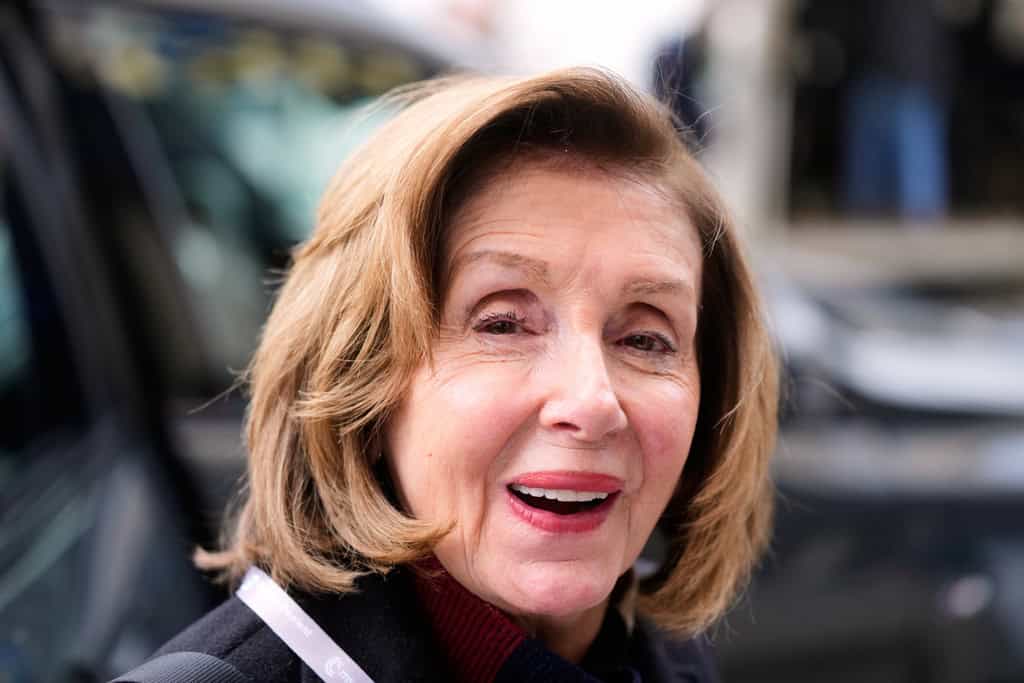
(Many of us will remember forever the statement last March of U.S. House Speaker Nancy Pelosi, D–Calif., “… but we have to pass the bill so that you can, uh, find out what is in it—away from the fog of the controversy.”)

CBO “scoring” must be confined to what is within the four corners of the legislation being proposed. Reid & Co. went through Byzantine legislative gymnastics in late 2009 to arrive at a set of conditions on which the CBO would “score” their legislation as having a positive effect on the Nation’s deficit decades out into the future.

U.S. House Budget Committee chairman Paul Ryan, R–Wis., appeared last week, January 6, on Fox News Channel’s “On the Record w/ Greta Van Susteren” and discussed this very subject, characterizing the Reid directions underlying CBO’s “score” as “smoke and mirrors.”

Of course they were smoke and mirrors. CBO Director Douglas Elmendorf said as much— with more careful language, to be sure—in his blog posted November 19, 2009. Among our letters to Bennet and Udall was one dated Dec. 1, 2009, 22 days before their fateful votes to approve Reid’s bill, including a link to that posting and discussing its implications as to dubiousness of the “score.”

More than a year later, Dec. 16, 2010, a letter to us from Bennet repeated the same, tired, challenged claim about CBO scoring:

“Health reform was fully paid for. In fact, the nonpartisan Congressional Budget Office found that health reform will reduce the federal deficit by $143 billion over the next decade and with further deficit reductions the following decade.”

I wrote back:

“Once again, you appealed to the $143 billion deficit reduction ‘score’ obtained from the Congressional Budget Office [fusion_builder_container hundred_percent=”yes” overflow=”visible”][fusion_builder_row][fusion_builder_column type=”1_1″ background_position=”left top” background_color=”” border_size=”” border_color=”” border_style=”solid” spacing=”yes” background_image=”” background_repeat=”no-repeat” padding=”” margin_top=”0px” margin_bottom=”0px” class=”” id=”” animation_type=”” animation_speed=”0.3″ animation_direction=”left” hide_on_mobile=”no” center_content=”no” min_height=”none”][at the time you voted for ObamaCare] in late 2009.
“There is enclosed an excerpt from a letter I wrote to you at that time— December 1, 2009— when we had begun to receive your CBO–supported argument about costs. A link was provided there to the CBO director’s blog, from which anyone reading at about ninth grade level could understand that the ‘score’ CBO had provided was little more than hot air. The director narrowly avoided outright cynicism as to Congress’s ever following through on major cost cutting that underlay the ‘score’ his office had been obligated to produce …

“We can be sure that a great many of your constituents haven’t the time, perhaps not even the interest, to understand the $143 billion myth you continue to purvey. However, Senator, you understand it, and I have written in detail to you enough times that you know I do as well. Therefore, my wife and I find it insulting to continue to receive from you this fatuous claim.” (Emphasis in original.)

I wrote above that Bennet’s performance as a U.S. Senator has been whiny and ineffective. Three days before casting his critical vote in favour of Reid’s bill, Bennet had delivered a speech on the floor of the Senate strongly decrying the pressure, deal–making and other methods used by leadership to get the requisite favourable majority. One of Bennet’s problems was that something like the notorious deals used to buy other senators’ votes hadn’t come his way for Colorado.

In the run–up to the election this past fall, The Denver Post published a comically tepid editorial endorsing Bennet’s election. Included was this:

“On Dec. 21, 2009, for example, [Bennet] made an impassioned speech on the Senate floor, blasting Washington lawmakers for their dirty dealing as they patched together a health care bill larded with special deals. It was an eloquent speech and a devastating indictment on all that’s wrong with Washington. Then, three days later, he voted for the bill. The current health care bill is law because of Bennet’s one vote.That vote, and his speech, epitomize his short Senate career. So much potential, yet not enough spine.”

Spine isn’t all Bennet lacks. He hasn’t enough character.[/fusion_builder_column][/fusion_builder_row][/fusion_builder_container]

For Media Inquiries:
Resonant Strategies for Centennial Institute

Contact: press@resonantstrategies.co
Subscribe Now

Centennial in the News

The Priceless Gift Marco Rubio Just Gave to the Next Generation of Americans, by Greg Schaller, Centennial Institute Director
Tocqueville’s Warning for the New Right, by Greg Schaller, Centennial Institute Director
The Slippery Constitutionality of Open Primaries, by Rob Natelson, Senior Fellow in Constitutional Jurisprudence
A Constitution Day Roadmap For The Supreme Court And How To End The Administrative State, by Rob Natelson, Senior Fellow in Constitutional Jurisprudence
The Conservative Movement Needs a Reckoning, Not a Revolution, by Greg Schaller, Centennial Institute Director
When Western Civilization Forgets Honor, by Greg Schaller, Centennial Institute Director
This Wasn’t About Conversion Therapy – It Was About Free Speech, by Dr. Mark Mayfield and Dr. Megan Cannedy, Centennial Institute Faculty Fellows
America’s 250th Anniversary Is The Perfect Time To Resurrect Our Slain Statues, by Greg Schaller, Centennial Institute Director
War In The Land Of Jesus Shows Us Why Easter Matters, by Dr. David Murphy, Centennial Institute Faculty Fellow
Pelosi Isn’t Alone – Congress is a Trading Floor, by Jaimie Erker, Centennial Institute Director of Communications

8787 W. Alameda Ave.
Lakewood, Colorado 80226

303-963-3157

Navigation
  • Western Conservative Summit
  • Support Centennial Institute
  • Contact
Search
Connect With Us
  • Facebook
  • X
  • Instagram
  • YouTube

Subscribe Now