Logo Logo Logo Logo Logo
Logo
  • Facebook
  • X
  • Instagram
  • YouTube
DONATE
  • Home
  • About
        • About Us
        • Centennial Institute at Colorado Christian University works to enhance public understanding of the most important issues relating to faith, family, and freedom.

        • Staff & Fellows
        • Meet our team of public policy professionals and issue experts, working to uphold faith, family, and freedom as the keys to America’s future.

        • Programs
        • We offer a series of programs designed to support civil discourse by bringing forward clear and thoughtful ideas from our state and nation’s thought leaders.

  • Publications
        • Centennial Review
        • Each quarter in Centennial Review, we publish essays on the fundamentals of a free and just society, adapted from speeches given by leading voices at our think tank or in the CCU community. Read this month’s Centennial Review to find out what we’re discussing.

        • Latest Reviews

        • Fall 2026
        • Summer 2026
        • Spring 2026
        • Policy Briefs
        • As Colorado Christian University’s think tank, we draw on the expertise of CCU Faculty, Centennial Institute Fellows, and other skilled policy analysts to provide background and recommendations on current issues facing policymakers in Colorado and the nation.

        • New Policy Briefs

        • Christian Reflections on Christian Nationalism
        • American Marxism Book Review
        • America, Critical Theory, and Social Crisis
        • 1776 Blog
        • Read the latest writings and analyses from Centennial Institute staff and fellows on important state and national issues.

  • Events
        • Western Conservative Summit
        • The Western Conservative Summit (WCS) has become the largest gathering of conservatives in the Western United States and the signature event of the Centennial Institute at Colorado Christian University. Read More

        • Issue Forums
        • Our monthly Issue Forums offer the opportunity for some of the top thought leaders to CCU’s campus to speak on the major issues facing our state and nation.Read more.

        • Young Christian Conservatives Leadership Conference
        • The Young Christian Conservatives Leadership Conference offers students, ages 16-20, the unique opportunity to be exposed to the nation’s most-pressing issues and learn how to impact the culture in support of Faith, Family, and Freedom. Read more.

  • Media
        • Press Releases
        • The Centennial Institute’s staff and fellows actively speak into the issues of the day. Learn about our latest announcements and projects here.

        • Podcasts
        • The Centennial Institute speaks into major issues through podcast interviews with some of the top thought leaders in the state and nation.

        • Videos
        • The Centennial Institute regularly posts videos on our YouTube channel. Watch our live stream or catch up on videos of past events here.

  • Summit

Living Constitution & Emergent Church: Subjectivity Reigns

  • By Greg Schaller

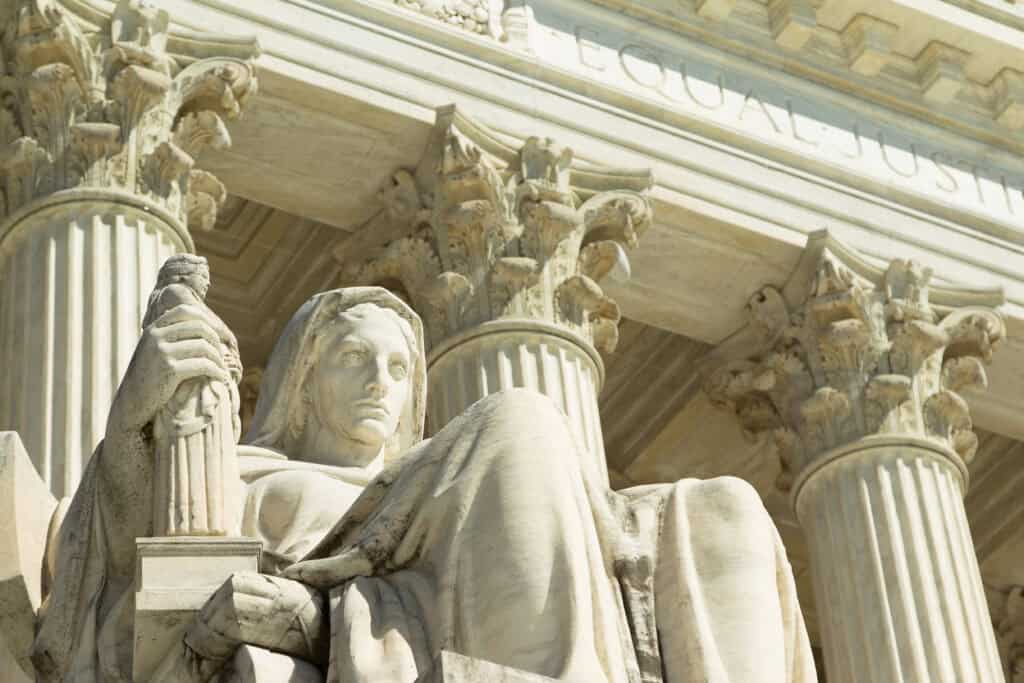
As the confirmation hearings for nominee Elena Kagan begin this week, we again return to the question of how Supreme Court justices should interpret the Constitution. Central to this inquiry is the approach that justices take towards both the text and the fundamental principles which undergird our Constitution. There has been a long-running debate concerning this among varying judicial philosophies, one that in many ways mirrors current tensions among the Christian church. The recent phenomenon of the emergent church movement provides us with a striking similarity to the approach taken by many of our nation’s modern/activist judges.

A very attractive approach in our modern culture comes to the following conclusion: When I no longer like the orthodoxy, I’m in favor of changing it. The temptation to question and challenge orthodoxy is indeed strong; in fact, our nature drives us to it. The history of religion finds numerous cases when those who were dissatisfied sought to overturn longstanding truths in favor of new ideas that “better suited” the circumstances of the day. Typically, what happens is that when we find orthodoxy no longer convenient, we seek to replace it by crafting something new, rather than align ourselves with it. More often, this is done through clever reinterpretations of the original.

In recent years, such a group has been increasing in their influence among the church. This group, commonly referred as the “emergent church” has intentionally remained elusive in declaring their doctrine. Yet among many in the movement, there are significant challenges to the fundamental orthodoxy of Christianity: through faith in Christ alone is the sole means of salvation. These revisionists are denying the doctrine of substitutionary atonement, the reality of Hell, and the very nature of the Gospel. The emergent movement comes out of frustration that the 21st Century church doesn’t fit well within a 21st Century mindset. For instance, it is indeed uncomfortable to think about eternal damnation in Hell. What to do? Remove this threat from religion. Or, it does indeed seem arrogant that Christ is the sole route to salvation. What to do? Open it up to other alternatives. Many in the emergent church movement are doing just these things.

Of course, this tendency to contradict the orthodoxy is not limited to religion. There are great similarities in the causes, methods, and desired ends of the “emergent” movement toward a “living Constitution.”

Justice William Brennan, in a 1985 speech at the Georgetown University School of Law, laid out his view of constitutional interpretation. “Like every text worth reading, it is not crystalline. The phrasing is broad and the limitations of its provisions are not clearly marked. It majestic generalities and ennobling pronouncements are both luminous and obscure. This ambiguity of course calls forth interpretation, the interaction of reader and text.”

Brennan concluded that the text of the Constitution was less important than his own desired ends of “justice.” When discussing the issue of capital punishment, Brennan, a longtime opponent, concluded that the Constitution was incompatible with state-sanctioned executions. Where did he find this? He certainly could not have concluded that capital punishment conflicted with the 8th Amendment concerning cruel and unusual punishment, as the authors of the amendment certainly had no such opinion. Looking to other portions of the Constitution, there is clear evidence that execution is permissible. Both the 5th and 14th Amendments permit its usage. The requirement that no person “be deprived of life, liberty, or property, without due process of law” presupposes that when a person has been guaranteed due process, then capital punishment may indeed be used.

Brennan is forced to ignore both the mind of the authors and the clear meaning of the text. Simply to state that the text is ambiguous, Brennan seeks to give himself permission to interpret it however he sees fit.

What Brennan challenged is the very concept of rule of law and the principles of limited government. He does this through the activist and “living constitution” approach to judicial review. The Supreme Court Justice, under our model of constitutionalism, is not entitled to “make the law what they want it to be.” Rather, they are to apply the law as it was intended. It is fine that Justice Brennan disliked the usage of capital punishment. It is absurd to conclude that it violates the text and/or the fundamental precepts of the Constitution.

What we need are justices who recognize the truth and value of the orthodoxy and who have a commitment to uphold it.

For Media Inquiries:
Resonant Strategies for Centennial Institute

Contact: press@resonantstrategies.co
Subscribe Now

Centennial in the News

The Priceless Gift Marco Rubio Just Gave to the Next Generation of Americans, by Greg Schaller, Centennial Institute Director
Tocqueville’s Warning for the New Right, by Greg Schaller, Centennial Institute Director
The Slippery Constitutionality of Open Primaries, by Rob Natelson, Senior Fellow in Constitutional Jurisprudence
A Constitution Day Roadmap For The Supreme Court And How To End The Administrative State, by Rob Natelson, Senior Fellow in Constitutional Jurisprudence
The Conservative Movement Needs a Reckoning, Not a Revolution, by Greg Schaller, Centennial Institute Director
When Western Civilization Forgets Honor, by Greg Schaller, Centennial Institute Director
This Wasn’t About Conversion Therapy – It Was About Free Speech, by Dr. Mark Mayfield and Dr. Megan Cannedy, Centennial Institute Faculty Fellows
America’s 250th Anniversary Is The Perfect Time To Resurrect Our Slain Statues, by Greg Schaller, Centennial Institute Director
War In The Land Of Jesus Shows Us Why Easter Matters, by Dr. David Murphy, Centennial Institute Faculty Fellow
Pelosi Isn’t Alone – Congress is a Trading Floor, by Jaimie Erker, Centennial Institute Director of Communications

8787 W. Alameda Ave.
Lakewood, Colorado 80226

303-963-3157

Navigation
  • Western Conservative Summit
  • Support Centennial Institute
  • Contact
Search
Connect With Us
  • Facebook
  • X
  • Instagram
  • YouTube

Subscribe Now