Logo Logo Logo Logo Logo
Logo
  • Facebook
  • X
  • Instagram
  • YouTube
DONATE
  • Home
  • About
        • About Us
        • Centennial Institute at Colorado Christian University works to enhance public understanding of the most important issues relating to faith, family, and freedom.

        • Staff & Fellows
        • Meet our team of public policy professionals and issue experts, working to uphold faith, family, and freedom as the keys to America’s future.

        • Programs
        • We offer a series of programs designed to support civil discourse by bringing forward clear and thoughtful ideas from our state and nation’s thought leaders.

  • Publications
        • Centennial Review
        • Each quarter in Centennial Review, we publish essays on the fundamentals of a free and just society, adapted from speeches given by leading voices at our think tank or in the CCU community. Read this month’s Centennial Review to find out what we’re discussing.

        • Latest Reviews

        • Fall 2026
        • Summer 2026
        • Spring 2026
        • Policy Briefs
        • As Colorado Christian University’s think tank, we draw on the expertise of CCU Faculty, Centennial Institute Fellows, and other skilled policy analysts to provide background and recommendations on current issues facing policymakers in Colorado and the nation.

        • New Policy Briefs

        • Christian Reflections on Christian Nationalism
        • American Marxism Book Review
        • America, Critical Theory, and Social Crisis
        • 1776 Blog
        • Read the latest writings and analyses from Centennial Institute staff and fellows on important state and national issues.

  • Events
        • Western Conservative Summit
        • The Western Conservative Summit (WCS) has become the largest gathering of conservatives in the Western United States and the signature event of the Centennial Institute at Colorado Christian University. Read More

        • Issue Forums
        • Our monthly Issue Forums offer the opportunity for some of the top thought leaders to CCU’s campus to speak on the major issues facing our state and nation.Read more.

        • Young Christian Conservatives Leadership Conference
        • The Young Christian Conservatives Leadership Conference offers students, ages 16-20, the unique opportunity to be exposed to the nation’s most-pressing issues and learn how to impact the culture in support of Faith, Family, and Freedom. Read more.

  • Media
        • Press Releases
        • The Centennial Institute’s staff and fellows actively speak into the issues of the day. Learn about our latest announcements and projects here.

        • Podcasts
        • The Centennial Institute speaks into major issues through podcast interviews with some of the top thought leaders in the state and nation.

        • Videos
        • The Centennial Institute regularly posts videos on our YouTube channel. Watch our live stream or catch up on videos of past events here.

  • Summit

Why not a Fourth of July Seder?

  • By Karen Kataline

In recent years, a growing number of voices including those of Dennis Prager—who will speak at next week’s Western Conservative Summit—Colorado’s own David Kopel have suggested that America is in grave and immediate need of a Fourth of July Seder.

Even secular Jews know what a Seder is. They remember it from childhood as that ridiculously long meal in which at least one person wants to know how long it’ll be ‘til we eat and three more provide a detailed analysis of the consistency of the matzoh balls.

Non-Jews may be less familiar with the custom. But SEDER, as Dennis Prager tells us, merely means “order.” The brilliance of ingesting the ordered story of the Exodus — FREEDOM, as we are ingesting a meal is what has enabled the Jewish People to pass it down from generation to generation.

Never in our lifetimes has it been more painfully clear that America is losing its way—that America’s story of freedom has not been successfully passed down or even passed around.

America is not a place. It is an idea. Today, we stand at the tipping point of losing the idea of America and the Freedoms on which it was founded. We are in a race against time to educate both young and old about the idea of America.

On Independence day, a few Patriots actually read The Declaration of Independence, but here is the actual story that should be told on our 4th of July Seder:

Independence Day is the national holiday which commemorates the signing of the Declaration of Independence by the Continental Congress on July 4, 1776, in Philadelphia, Pennsylvania.

At the time of the signing the US consisted of 13 colonies under the rule of England’s King George III. There was growing unrest in the colonies concerning the taxes that had to be paid to England. This was commonly referred to as “Taxation without Representation” as the colonists did not have any representation in the English Parliament and had no say in what went on. As the unrest grew in the colonies, King George sent extra troops to help control any rebellion. In 1774 the 13 colonies sent delegates to Philadelphia Pennsylvania to form the First Continental Congress. The delegates were unhappy with England, but were not yet ready to declare war.

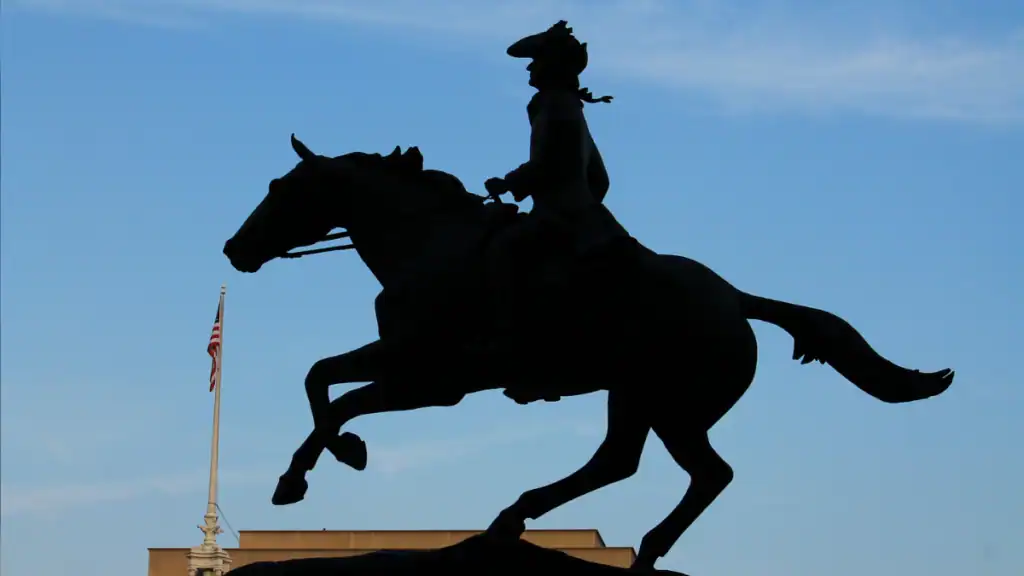
In April 1775 as the King’s troops advanced on Concord Massachusetts Paul Revere would sound the alarm that “The British are coming, the British are coming” as he rode his horse through the streets.

The battle of Concord and its “shot heard round the world” would mark the unofficial beginning of the colonies war for Independence. For almost a year the congress tried to work out its differences with England, again without formally declaring war.

By June 1776, a committee was formed to compose a formal declaration of independence. Headed by Thomas Jefferson, the committee included John Adams, Benjamin Franklin, Robert R. Livingston and Roger Sherman. Thomas Jefferson was chosen to write the first draft which was presented to the congress on June 28. After various changes a vote was taken late in the afternoon of July 4th. Of the 13 colonies, 9 voted in favor of the Declaration, 2 – Pennsylvania and South Carolina voted No, Delaware undecided and New York abstained.

To make it official John Hancock, President of the Continental Congress, signed the Declaration of Independence. It is said that John Hancock signed his name “with a great flourish” so “King George can read that without spectacles!”

The following day copies of the Declaration were distributed. The first newspaper to print the Declaration was the Pennsylvania Evening Post on July 6, 1776. On July 8th the Declaration had its first public reading in Philadelphia’s Independence Square. Twice that day the Declaration was read to cheering crowds and pealing church bells. Even the bell in Independence Hall was rung. The “Province Bell” would later be renamed “Liberty Bell” after its inscription –

Proclaim Liberty Throughout All the Land Unto All the Inhabitants Thereof

And although the signing of the Declaration was not completed until August, the 4th of July has been accepted as the official anniversary of United States independence. The first Independence Day celebration took place the following year – July 4 1777.

CEREMONIAL FOOD FOR OUR 4th of July Seder:

Turkey should be served, since Franklin wanted that as our national bird. “The turkey nourished our Pilgrim forebears,” he explained. You should wash it down with sassafras tea: that’s what Americans drank while boycotting the tea of the British East India Company, which the King subsidized because it was “too big to fail.” And the most American of foods, and a July tradition: corn on the cob! For dessert: Dolly Madison ice cream, and perhaps Martha Washington’s sponge cake.

So, after our celebration, go home and read the Declaration of Independence but don’t skip over the grievances. What would our Founders have to say about the course of human events today? Share the Constitution, the Bill of Rights and the IDEA of America with liberals and children (???) We can’t afford to wait until next 4th of July.

We hold these truths to be self-evident, that all men are created equal, that they are endowed by their Creator with certain unalienable rights, that among these are life, liberty and the pursuit of happiness. That to secure these rights, governments are instituted among men, deriving their just powers from the consent of the governed. That whenever any form of government becomes destructive to these ends, it is the right of the people to alter or to abolish it, and to institute new government, laying its foundation on such principles and organizing its powers in such form, as to them shall seem most likely to effect their safety and happiness…. And for the support of this declaration, with a firm reliance on the protection of Divine Providence, we mutually pledge to each other our lives, our fortunes and our sacred honor.
For Media Inquiries:
Resonant Strategies for Centennial Institute

Contact: press@resonantstrategies.co
Subscribe Now

Centennial in the News

The Priceless Gift Marco Rubio Just Gave to the Next Generation of Americans, by Greg Schaller, Centennial Institute Director
Tocqueville’s Warning for the New Right, by Greg Schaller, Centennial Institute Director
The Slippery Constitutionality of Open Primaries, by Rob Natelson, Senior Fellow in Constitutional Jurisprudence
A Constitution Day Roadmap For The Supreme Court And How To End The Administrative State, by Rob Natelson, Senior Fellow in Constitutional Jurisprudence
The Conservative Movement Needs a Reckoning, Not a Revolution, by Greg Schaller, Centennial Institute Director
When Western Civilization Forgets Honor, by Greg Schaller, Centennial Institute Director
This Wasn’t About Conversion Therapy – It Was About Free Speech, by Dr. Mark Mayfield and Dr. Megan Cannedy, Centennial Institute Faculty Fellows
America’s 250th Anniversary Is The Perfect Time To Resurrect Our Slain Statues, by Greg Schaller, Centennial Institute Director
War In The Land Of Jesus Shows Us Why Easter Matters, by Dr. David Murphy, Centennial Institute Faculty Fellow
Pelosi Isn’t Alone – Congress is a Trading Floor, by Jaimie Erker, Centennial Institute Director of Communications

8787 W. Alameda Ave.
Lakewood, Colorado 80226

303-963-3157

Navigation
  • Western Conservative Summit
  • Support Centennial Institute
  • Contact
Search
Connect With Us
  • Facebook
  • X
  • Instagram
  • YouTube

Subscribe Now