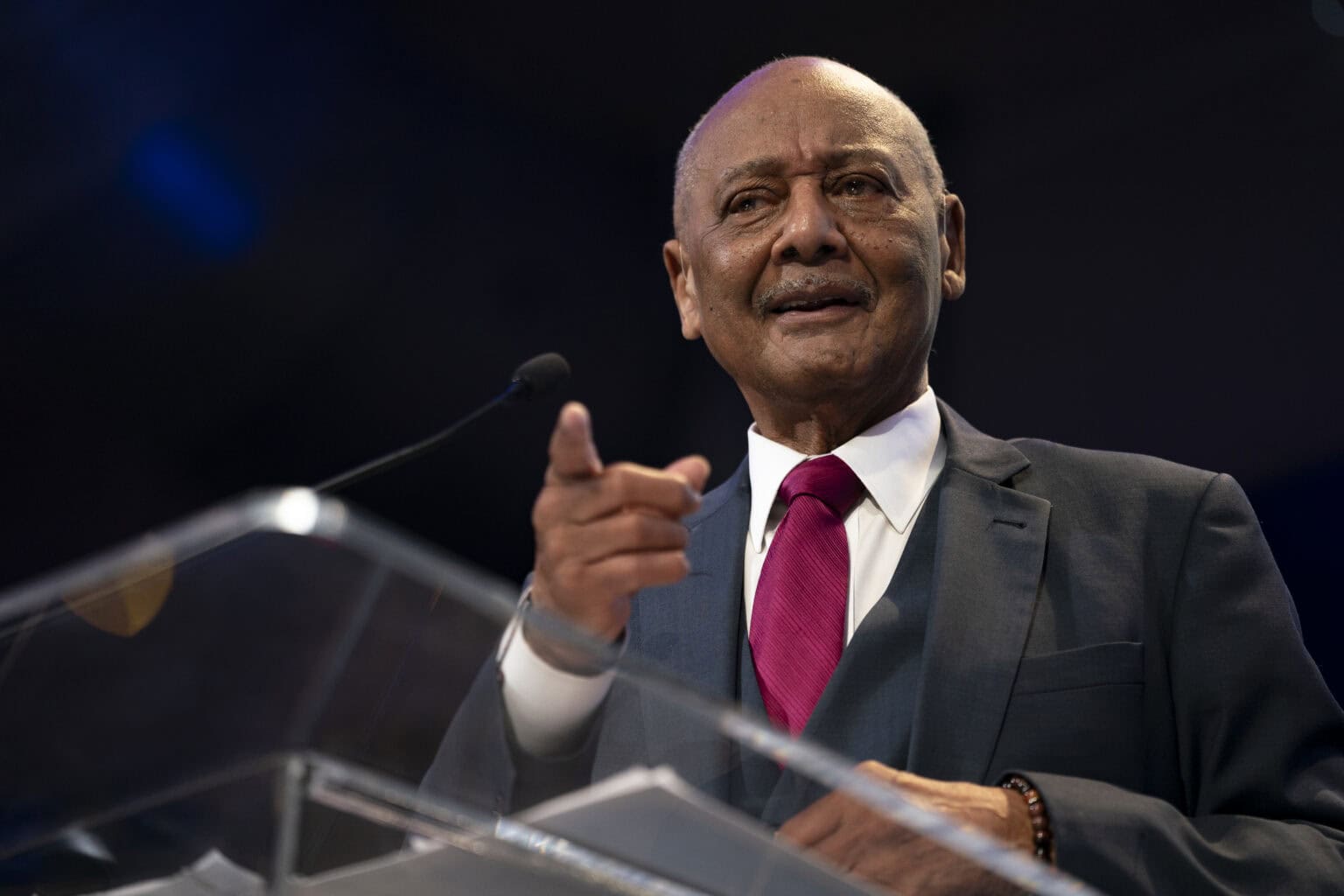
In an age when many anti-poverty programs measure success by dollars spent or bureaucracies expanded, Robert L. Woodson Sr. spent his life measuring success by transformed lives. He believed that genuine human flourishing could not be engineered from Washington conference rooms or government spreadsheets. It had to begin with neighborhoods, families, churches, and in the hearts of people willing to take responsibility for their own recovery and redemption.
I saw this firsthand in May 2011.
That spring, I led a group of Colorado Christian University students on our annual week-long academic trip to Washington, D.C.. The course traditionally involved visits to think tanks, government agencies, and meetings on Capitol Hill. But that year we changed course. Instead of spending another day listening to policy experts discuss poverty from a distance, we spent an entire day with Bob Woodson and his team at what was then called the Center for Neighborhood Enterprise, now known as the Woodson Center.
That visit stemmed from a conversation I had earlier that year with Bob after he spent two days with our university community speaking about one of CCU’s strategic priorities: “Compassion for the Poor.” Bob invited us to come see firsthand the programs he had designed to address addiction, poverty, violence, and hopelessness, not through dependency, but through dignity and accountability.
What we encountered that day profoundly impacted our students.
We visited three different facilities in Washington and Waldorf, Maryland, where men and women who had once been gang members, drug dealers, prostitutes, addicts, or trapped in generational poverty were rebuilding their lives. These were not sanitized presentations or carefully staged public relations events. They were raw and honest conversations with people who openly acknowledged the destructive choices they had made and the difficult path toward restoration.
Bob Woodson expected exactly that.
He believed people must own their mistakes and recognize their own agency in recovery. Compassion, in Bob’s view, was never synonymous with excusing destructive behavior. True compassion required telling people the truth while also offering hope, structure, and the support needed to rebuild their lives.
In many ways, Bob embodied what I would call “principled policy.”
He started with first principles about the human person: that every individual possesses dignity, moral agency, and the capacity for redemption. From those principles flowed his policy ideas. Unlike many modern anti-poverty advocates, Bob did not see struggling people primarily as victims of systems to be managed by experts. He saw them as human beings capable of responsibility, resilience, entrepreneurship, leadership, and transformation.
His “Woodson Principles” reflected this philosophy: competence, integrity, transparency, resilience, witness, innovation, inspiration, agency, access, and grace.
Those principles were not abstractions. They were lived realities.
The Woodson Center’s operating philosophy rested on several deeply countercultural convictions. First, that low-income individuals and neighborhood organizations themselves should play the central role in solving the problems of their own communities. Second, that effective social programs should operate with the same expectations of accountability, efficiency, entrepreneurship, and measurable results that exist in the marketplace. And, third, that faith-based initiatives are uniquely equipped to address the behavioral and spiritual dimensions of poverty that government programs often ignore.
These ideas challenged both the political left and the political right. Bob rejected the paternalism of bureaucratic dependency, but he also challenged conservatives who talked endlessly about free markets while neglecting the moral and spiritual foundations necessary for flourishing communities.
He understood something many policymakers still fail to grasp: poverty is never merely economic.
Broken families, addiction, violence, despair, isolation, and the loss of moral formation all contribute to cycles of poverty that no government check alone can solve. Bob understood that transformation often comes through local mentors, churches, former addicts, and neighborhood leaders who possess earned credibility because they themselves have overcome adversity.
Syndicated columnist Cal Thomas joined us during our day with Bob and later reflected on the experience in a column titled “Some Real Reason for Hope.” Thomas observed what our students witnessed firsthand: Bob Woodson’s work succeeded precisely because it focused not on studying failure, but on identifying and empowering people who were already succeeding in helping others reclaim their lives.
Hope was the defining feature of Bob Woodson’s life and work. Not naïve optimism. Not political sloganeering. But genuine hope grounded in the belief that human beings are capable of redemption. At a time when America increasingly speaks the language of grievance, victimhood, and division, Bob Woodson consistently spoke the language of responsibility, dignity, faith, and renewal.
His legacy is not merely a collection of policy papers or public speeches. His legacy lives in transformed neighborhoods, restored families, redeemed lives, and in the countless people who now understand that compassion without accountability is not compassion at all.